New WHO Guidance: What You Should Know About Hearing and Brain Health
Monday, September 28, 2026
|
2 min read
Patient Resources, Hearing Loss
Have you ever found yourself nodding along during a family dinner at a restaurant, only to realize you missed most of the conversation? Or maybe you strain to hear your grandkids' high-pitched voices, feeling a step behind. It's a common frustration, but it can be a sign that your brain is working overtime just to keep up.
September is World Alzheimer’s Month, a time to raise awareness of Alzheimer’s disease and dementia while encouraging conversations about brain health.
For years, audiologists and researchers have recognized a connection between hearing loss challenges and cognitive health. Now, the World Health Organization (WHO) has updated its dementia risk-reduction guidelines to include hearing aids, where clinically appropriate, as a key intervention that may help reduce the risk of dementia.
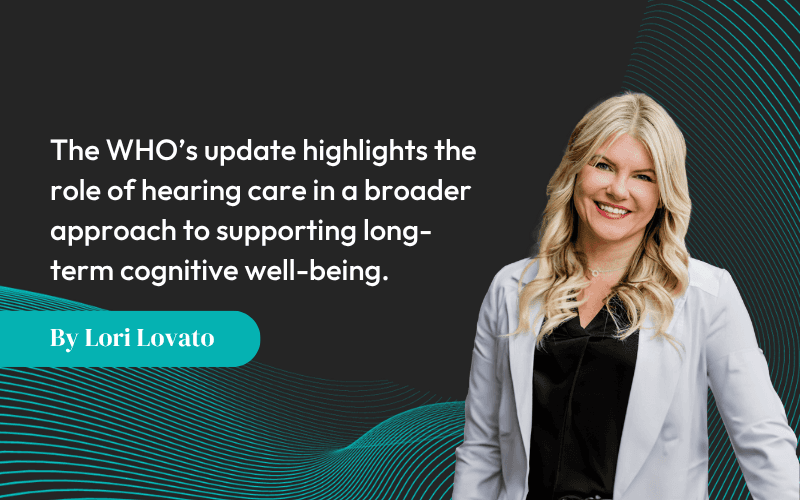
This update highlights the role of hearing care in a broader approach to supporting long-term cognitive well-being.
The Connection Between Hearing Challenges and Brain Strain
When your hearing is clear, sound signals travel effortlessly to the brain, where they are quickly processed, but when hearing difficulties are present, those signals become jumbled and incomplete. Your brain then has to work much harder to fill in the gaps and decode the information.
This constant effort is known as cognitive load, and it can drain your cognitive reserves; the mental energy that should be going toward memory, focus, and problem-solving is diverted to the task of simply hearing.
Beyond the added mental effort, untreated hearing difficulties can also contribute to social withdrawal, which is itself associated with an increased risk of dementia. When conversations become difficult to follow, you may naturally start avoiding social situations, particularly in busy or noisy environments.
Over time, this reduced social engagement can affect your overall well-being and may contribute to a cycle that becomes increasingly difficult to break.
Hearing Care as a Crucial Intervention: The WHO's Guidance
The WHO first recognized the importance of addressing hearing loss challenges as part of dementia risk reduction in its 2019 guidance. The WHO’s 2026 guidance takes this a step further, identifying hearing aids as an important intervention that, when clinically appropriate, may play a role in lowering the risk of cognitive decline and dementia.
This doesn't mean that hearing aids are a cure for dementia or that they can prevent it. Instead, the updated guidance highlights hearing difficulties as a modifiable risk factor, which is something you may be able to change or manage to potentially reduce your risk of a health condition.
For you, that can mean addressing hearing difficulties sooner and making informed choices about the hearing care that best supports your needs.
Take the First Step For Your Hearing and Cognitive Health
As hearing changes often happen gradually, you may not realize how much they are affecting you until everyday conversations start to feel more difficult. If you’ve found yourself struggling in noisy environments or missing parts of conversations, a hearing evaluation can help you understand what’s happening and what you can do about it.
During your evaluation, you’ll have the opportunity to talk about the situations where you notice the most difficulty. Our team of hearing health experts will perform a series of assessments to build a detailed picture of your hearing, then take the time to explain your results clearly and answer any questions you may have.
If hearing loss challenges are identified, you’ll be able to explore the solutions that best suit you. Depending on your needs, this could include communication strategies, professional earwax removal, or advanced hearing aid technology. The goal is to help you find an approach that fits your lifestyle and priorities.
Contact our team at Magnolia Hearing today to get started on your hearing health journey!
Frequently Asked Questions
Q: What’s the difference between the hearing aids you offer and OTC options?
A: Over-the-counter (OTC) hearing aids are a one-size-fits-all solution designed for perceived mild hearing challenges. They provide basic amplification but lack the personalization needed to address a specific hearing profile.
Prescription hearing aids at Magnolia Hearing are custom-programmed to your exact hearing needs based on a thorough evaluation. This process ensures that the sound you receive is clear and comfortable, not just louder.
We also provide ongoing support, adjustments, and care to ensure you get the most out of your devices, which is a crucial part of your long-term hearing and cognitive health journey.
Q: Could earwax be responsible for my hearing difficulties?
A: A buildup of earwax can block sound from traveling through the ear canal, causing muffled hearing or discomfort. Your audiologist can examine your ears to see whether a blockage is present and advise whether professional removal is appropriate.
Avoid inserting cotton swabs or other objects into your ears, as this may push the wax deeper.
Q: Can hearing difficulties sometimes look like memory problems?
A: Yes. If part of a conversation never reaches you clearly, it may be difficult to remember the information later because it was not fully understood in the first place.
However, hearing loss challenges should not be assumed to explain ongoing memory changes; concerns about memory or thinking should also be discussed with your physician.
Sources:
Risk reduction of cognitive decline and dementia: WHO guidelines

Latest Articles
Search


Better Hearing Starts Here – Schedule Your Visit at Magnolia Hearing
Get the expert care you deserve at Magnolia Hearing. Whether you need a comprehensive hearing test, tinnitus treatment, or expert advice on hearing health, our experienced team is here to help.
We offer personalized solutions tailored to your unique needs, ensuring you get the best possible care. Take the first step toward better hearing—schedule your appointment today!
